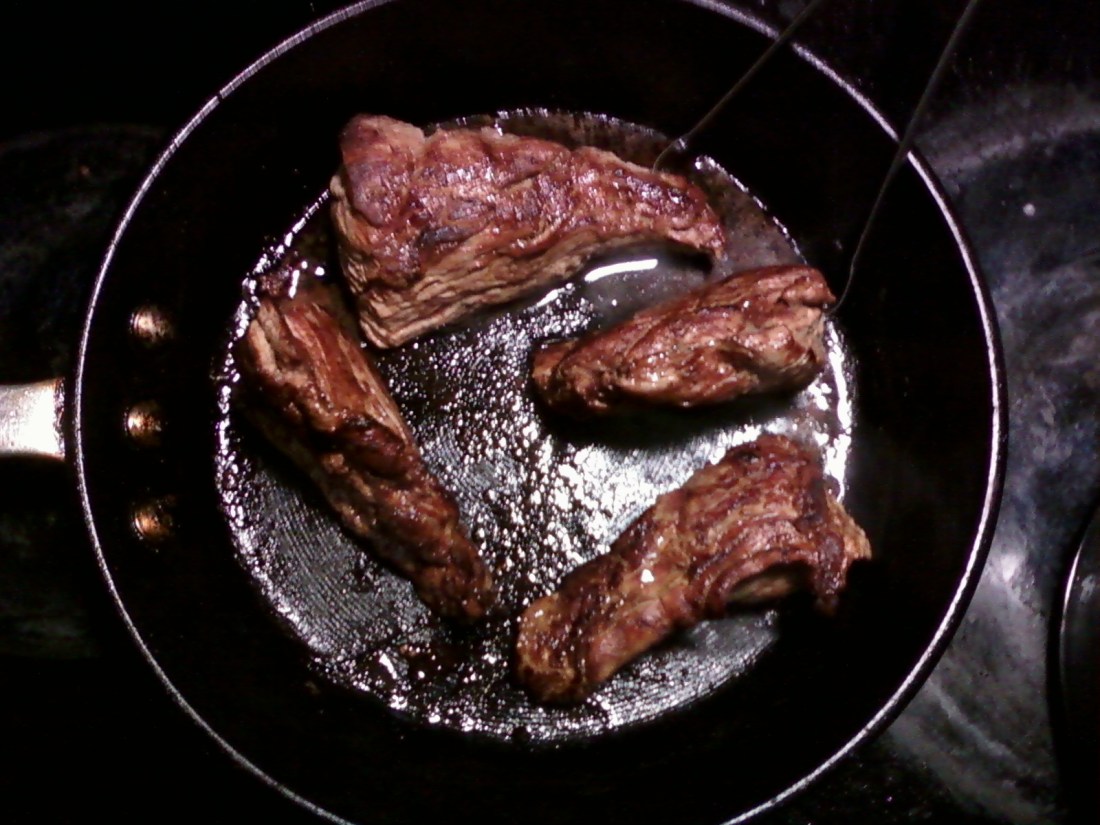
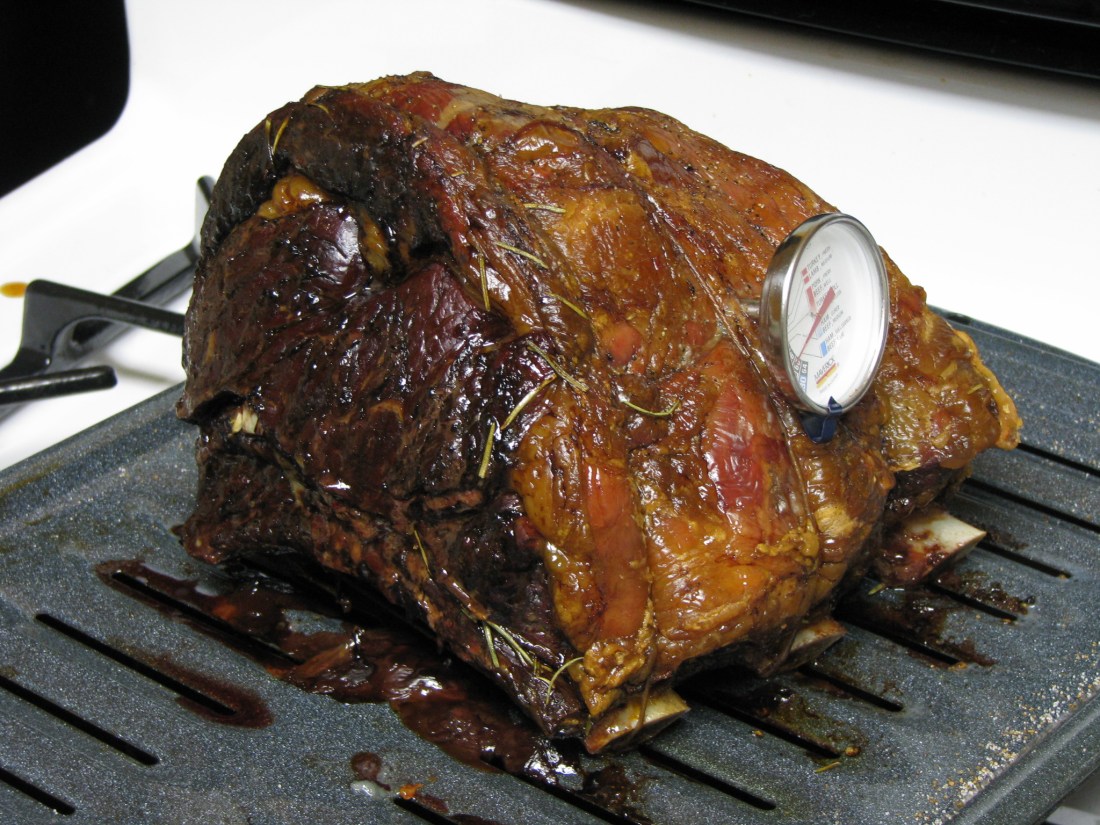
I GOT BEEF: nice to MEAT you!
Lifestyle
Food & Beverage
It turns out that I have a lot to say about beef, and in this town can you blame me? We had a delivery to the meat department last week from Redwood Meat. The guy came in with boxes of trim for us to grind into hamburger. Instead of leaving the boxes in our walk-in like usual, he asked me for some lugs (50lb capacity plastic containers) and explained by saying, “I got hot meat!”
Now I’m not exactly sure what’s happening here, but at the same time, I think, well, I guess it’s pretty obvious what’s going on… I grab a handful of lugs from the cut room and re-enter the cooler. Our bulk department head steps in just then and asks the question on everyone’s mind, “What’s hot meat?”
“Well,” the guy says, pausing for a moment to look right at us, “it was walking around a few hours ago! Now, we had to get it to you and didn’t have the time to drop it in our freezer for a few hours like we normally do, so lets’ spread it out in these lugs and make sure it gets cool.” We put our heads down and our hands to work. The meat was warm and blubbery like Jello. There was a hum in the air, too.

This topic may be getting old, but that is appropriate because lastly, I want to talk about aged beef. I have an eye for meat; I’ve seen it at its best and I’ve seen it past due. Reading meat is pretty much a sixth sense of mine at this point. I trust my senses, and so do my customers.
When my experienced eye turns to beef, I am always salivating over the old brown piece. Can you believe it? Most customers find the oxidized steak distasteful compared to the bright red color of freshly sliced beef. However, there are a select few who know that the browner the beef, the better!

A well-aged steak’s flavor has appreciated considerably and it is going to be easier to digest. Beef is unique in that it resists invading bacteria that would break it down, so it doesn’t deteriorate like most meat. In fact, after a week in our case you can cut a browner steak to find that it is only brown on the outer 1/8th of an inch; the inside is red as can be.
Under the right conditions beef will age just the same as a fine wine or fancy cheese. As time goes by, you can detect a slight change in texture and when cut, the meat will look like it has a roughness to it like split ends, which is pretty much exactly what they are because the very grain of the meat is weakening. Aged beef is a preference that I see expressed amongst discerning customers and it is those folks that I am always happy to meat. Don’t be shy; give it a try!
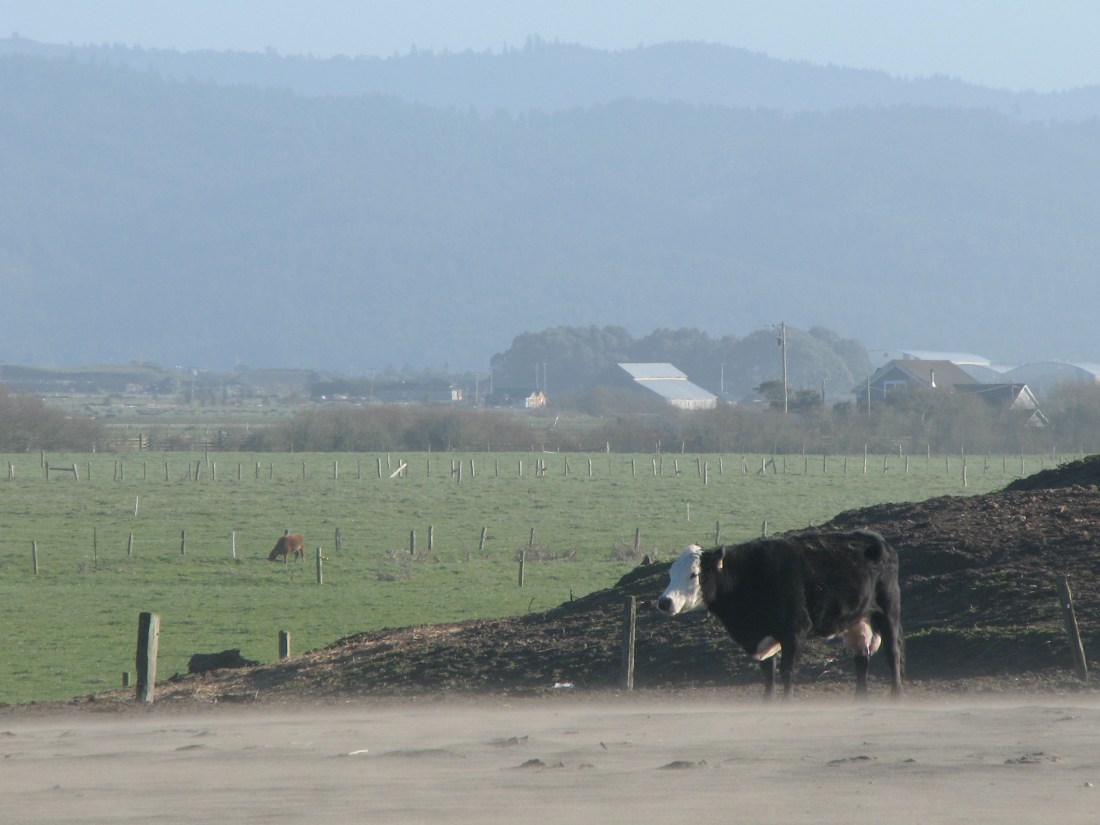
This is a quick tutorial on tackling a massive topic: cows. In this town they are all over, so you know they’re big! Most are also grass-fed and finished, like Clint Victorine’s Pacific Pastures and Eel River Organic Beef (a topic I covered in a previous post). Let’s look out on the pasture to see what the cows are bringing home.

You might think, it is too hard to learn all the parts of a thousand pound creature. In fact, you might be tempted to “graze” right over it, but trust me: this is simple! I will teach you a little bit about anatomy then you can match the part of the animal with the type of preparation it requires. When you visit the meat counter find out what general region each piece comes from. You can ask the butcher or Google it. Knowing some anatomy, you will be able to understand how to prepare it.
The closer a cut of beef is to the extremities of the animal (i.e. horns or hooves) the tougher it is going to be. Therefore the shoulders, rump and legs become tough because they are used frequently for hefting the cow as it grazes. Considering the size of a cow, that can be some serious grunt work!

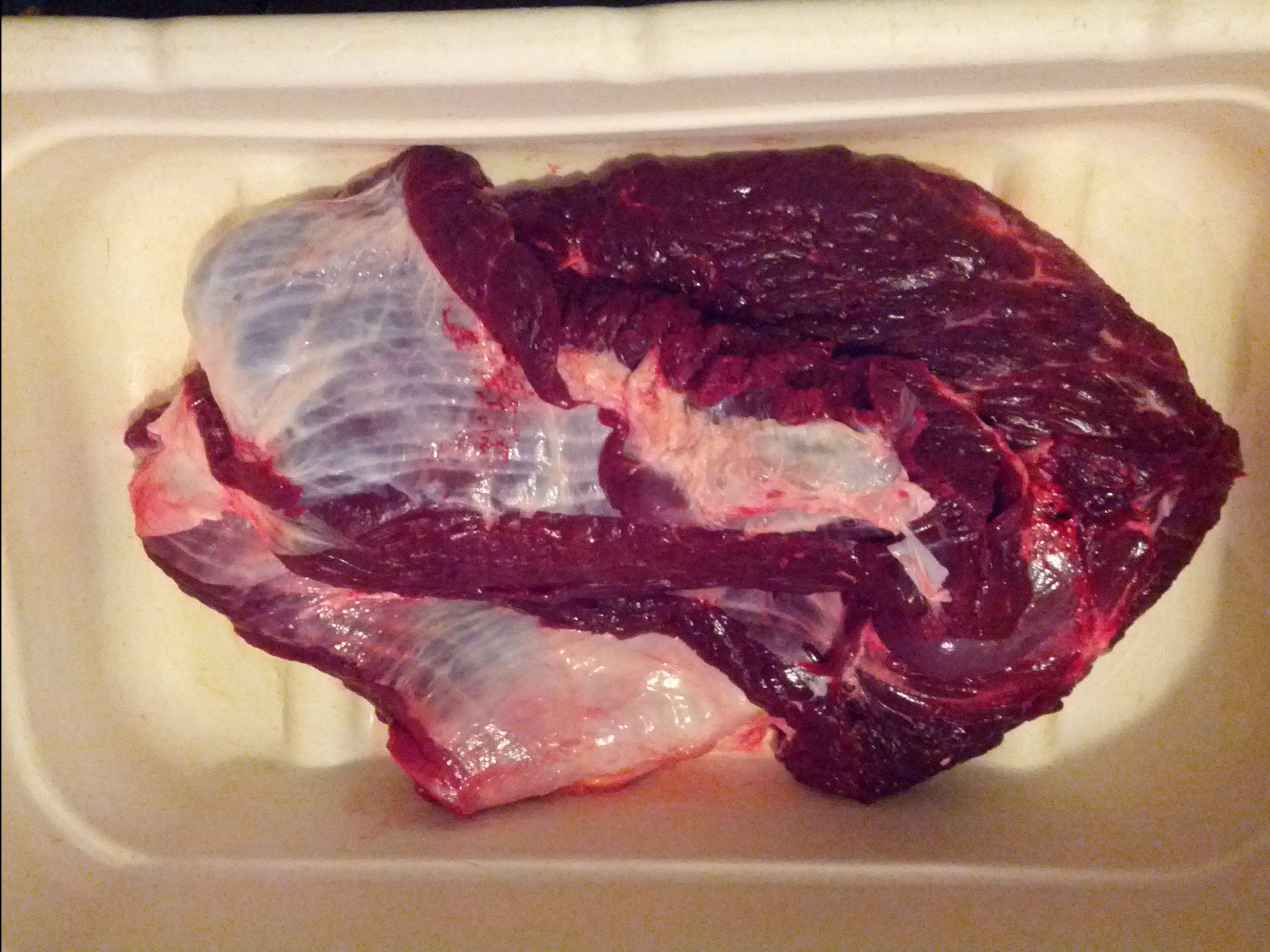
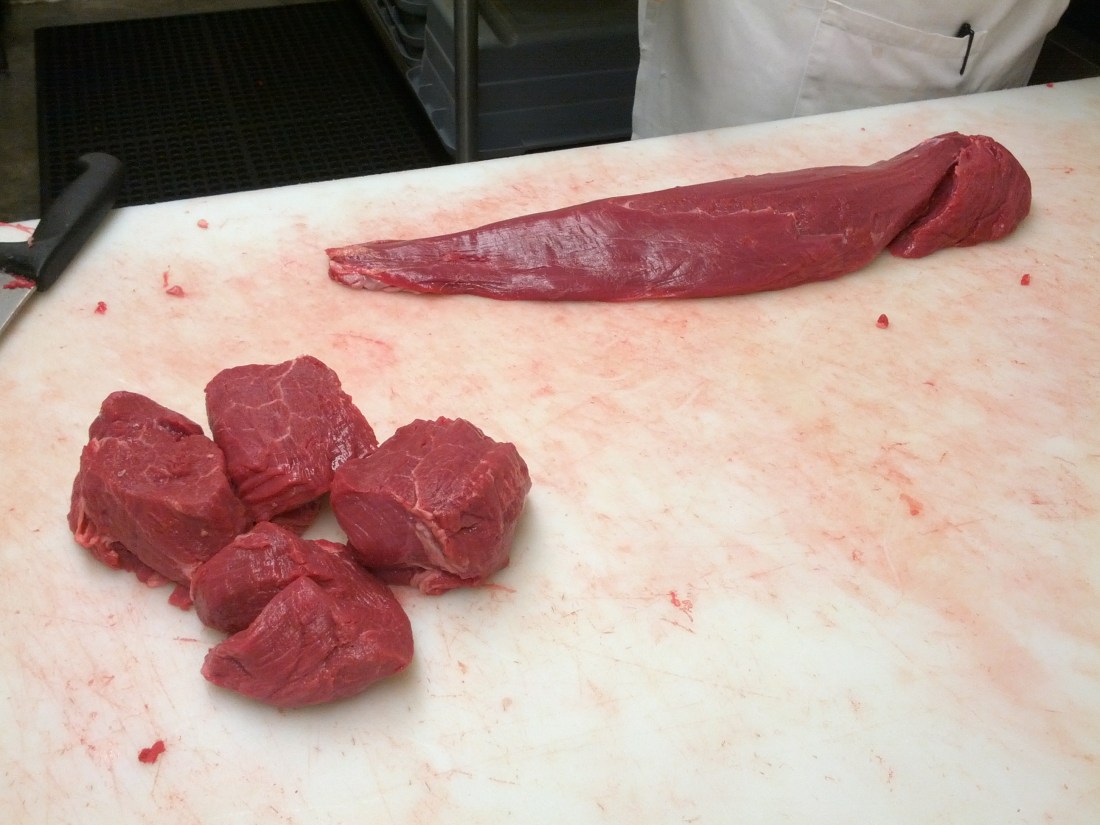
Tender pieces hang out in the middle of a cow, between the front and back legs. That is where the prime cuts like Ribeye (pictured above) and Sirloin are found. For instance, the softest muscle in a cow is the Filet Mignon (aka tenderloin) which has the small task of supporting the quadruped’s spine (pictured below).

Equipped as you are, with a rough anatomy lesson, let’s begin to apply cooking techniques. I’m going to match up two basic heat applications with the two types of meat we just covered (tough v. tender).

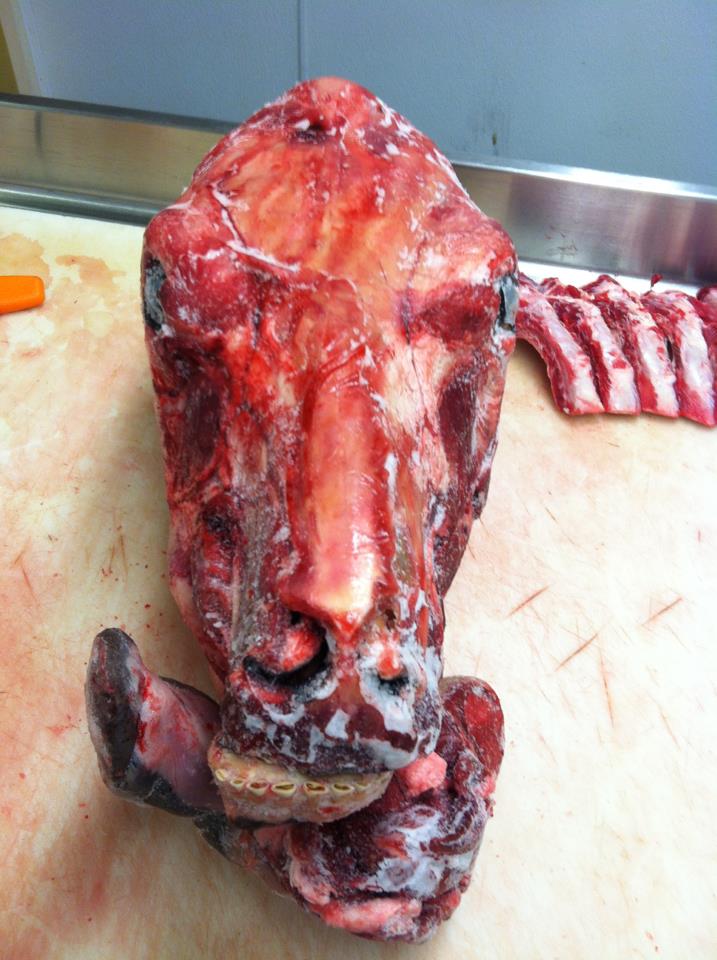
Tough cuts, like this cow head want to be cooked “low and slow,” that means a long time at a low temperature. This process renders out fat so that the lean meat is juicy and falling apart. Oftentimes, this is achieved with an all-day barbeque or smoker that takes a lot of time but renders out the fat entirely so lean meat is literally falling off the bone. This technique is best applied to tough cuts like a shank (i.e. leg), ribs, shoulder or rump.
My favorite tough cut is the chuck, which comes from the shoulder. It is well marbled, which means a lot of those healthy grass-finished fats. As the fat is rendered into liquid stock it imparts flavor and moisture, while the lean meat pulls apart into a lovely shredded or “pulled” beef texture. It’s easy and foolproof. You can’t overcook a chuck and all the while you are developing a feel for how meat responds to heat. You can use a crock pot, the oven or even cover it on the stovetop.
First the meat contracts tightly. After some time though, the piece starts to relax again (now things are getting good.) Keep on cooking and you will find that pieces get easier and easier to pull apart. Before long they are falling off the bone and melting in your mouth! When finished, the fat has disappeared entirely and the only thing left is succulent strings of beef in a wonderful au jus. You can make stew, tacos/fajitas or just a big BBQ sandwich! Don’t forget the coleslaw.

On the flip side, tender steaks like a “hot/quick” treatment. They can be seared with a short, blistering dose of heat from the grill and served rare on the inside. It is always best to let the meat you are about to cook sit on the counter for a while and come to room temp. I also take this opportunity to apply a little Ted and Barneys, which is a seasoning that I use on every piece of meat that I cook (because it’s genius). Heat the pan and sear steaks for a minute or two on each side. Now, you can finish them in the broiler at four minutes a side. Finally, let them rest, covered on a cool plate for 5-15 minutes.
Once you’ve learned the concepts inherent in each method, you can mix and match those processes to effectively “freestyle” meat preparation with wonderful results! Searing a steak seals in its’ juices. Finishing that steak in a 200 degree oven for ten-twenty minutes (instead of a broiler for four) transitions you to a gentler “low and slow” approach. I especially recommend this option for pork chops, since they tend to dry out faster than beef. Once again, it is nice to “meat” you! Give these approaches a try and may the fat morsels be with you.
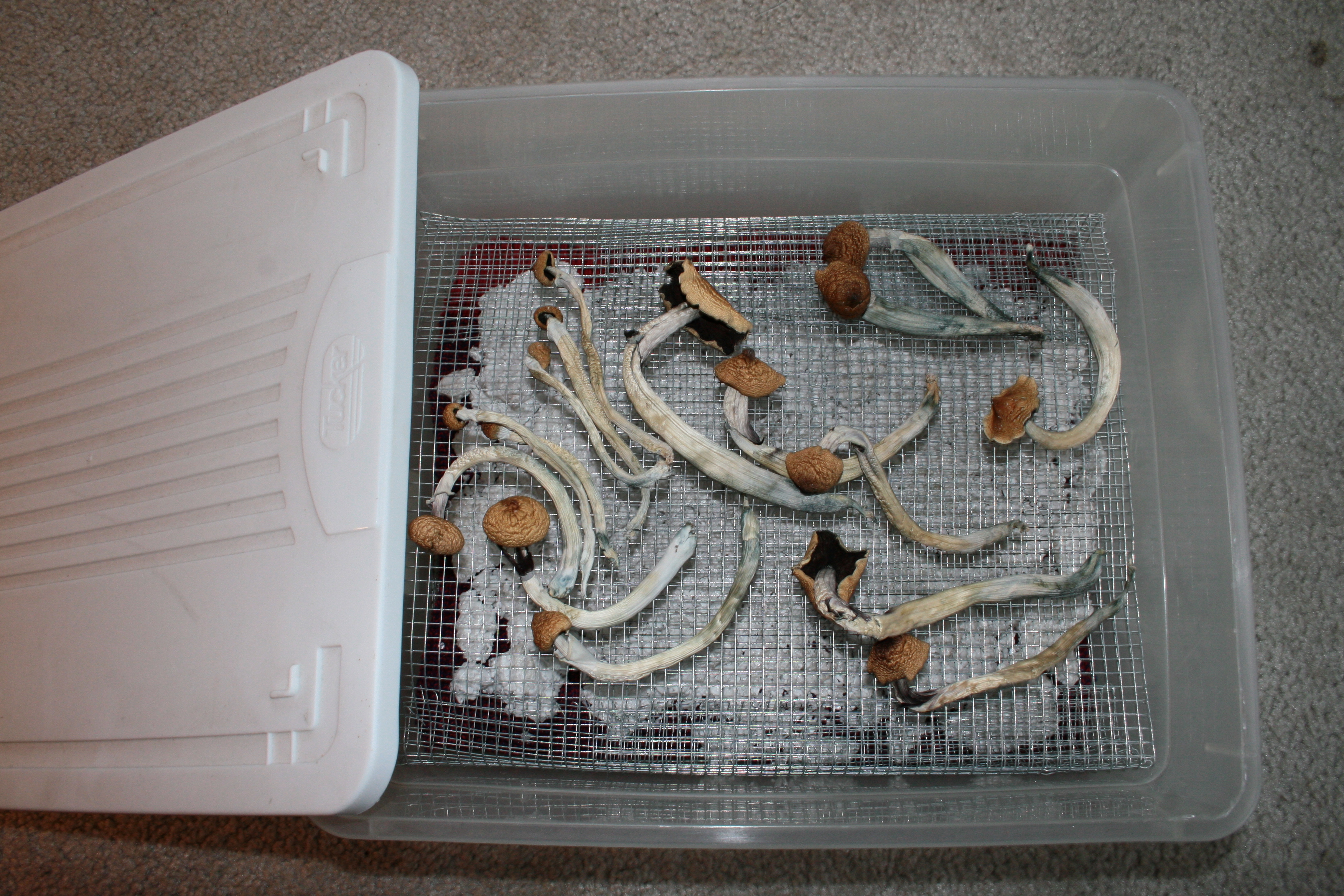
“Known by the earth, you are. Loved by the earth, you are… There is a confluence of energy that wraps around you that says, ‘I know you. You belong here. It is appropriate that you step upon the planet.'” -Lee Carroll and Kryon Magnetic Service
I have a friend who is both hunter and vegetarian. In the woods, she can kill a deer and eat it; in society, she carefully avoids meat. I crossed the country from a Maryland metropolis to California coast before I experienced the real difference fresh, local, loved food makes- and how great it tastes! I had to dig in the dirt myself to feel what it was. In today’s world we can hardly find restaurants, markets or grocers with ripe, organic, wholesome fruits & vegetables or pastured chicken eggs, grass-fed and finished meats or dairy. It’s important to note that the things we eat, whether plant or animal, deserve basic love and respect in their short life because they have sacrificed for our own greater purpose.
In my homesteading adventures, I have now met chickens, goats, turkey, pig, cow and sheep. I can’t say I sought them out, but once a person starts gardening, sooner or later the farm is going to get your goat! As a meat eater, I have a natural curiosity about my carnivorous ways. So I find myself on the land, prepared to understand the process by hand.
I helped to butcher and process two wild whitetail deer. Respect and honor was given for their sacrifice and we were gracious as we shared deer burgers for lunch in the midst of carving.
I watched a wild boar shot, bled out and butchered by a young man with natural skill. He had acquired and honed these abilities all his life: in the woods with his father. I could see that experience as he swiftly skinned and decapitated the boar. I could feel it as he cut out the animal’s heart, inspected the health of the liver and claimed the animals back straps.
I collected snails while weeding in the garden. Then I used them to bait my hook and caught catfish out of the pond. We filleted three huge fish and put them in the freezer for winter.
For a month, I fed two mother goats and their three kids. We drank the milk they gave, made farmer’s cheese from it and when it was time transported the boy kid to slaughter.
I shepherded sheep to the shearer, skirted their fleeces and sent each ewe packing back to pasture. Two years later, I have learned to wash, spin and crochet this rough material into warm hats and scarves (thank you spinners at Arcata Farmer’s Market).
I harvested chicken and duck eggs and cared for a couple turkeys, but never have I twisted the neck of a foul. Some of these things sound brutal, but the message that I am trying to convey is that death is a necessary and very important part of the cycle. The process of taking a life demands care and respect. Through that action, honor is given and we are sustained. I am proud to know, especially firsthand, the experience and sacrifice of my feast …for us all to come full circle together.
As I seek, so I have found greener pastures, and in them Daisy Mae, a milk cow who lives in Bayside. I mean milk in the most real sense of the word – none of this almond, hemp, coconut, soy, rice …water. I admit that squeezing her juice right from the teat into my jar was …jarring. However, with experience and education, I am learning the beauty and honesty of her raw milk. I am making yogurt, and, you might say: I have found the WHEY.
There is a wordless grace to our relationship with domesticated animals; every time the cow nudges you it’s a reminder that this is a cooperative experience of connecting to source and together gathering sustenance. The practice of milking is very palpable; be careful not to get shit in the bucket. There is a necessary dedication to technique but also care- a syphoning meditation. After three days, we were starting to get along. Daisy Mae’s natural gift is nestled right there: in this stunning relationship that has existed and evolved over too many, many years to count. From it we can place cream, butter and cheese on our table. Thank you, dear.
And now, here- in Kryon’s words, through Lee Carroll:
“I speak of the precious animals all the time and how they’re here to service humanity and how they do it so completely. I’ve spoken about how some of them are here to be eaten. Many don’t like to hear this, but understand that collectively the animals understand this. They have to be part of the Human food chain, since humanity doesn’t have the ability to grow things fast enough and distribute that food. So that’s a service, you see? For those of you who are vegan, you might say, “I never eat them!” That is a choice for your health. It’s appropriate and accurate, but doesn’t hold true for the survival of the Human race, for animals are needed for Human nourishment and survival at the moment.
So let’s divert for a moment and give you some valuable information about Human consumption of animal life. Many Humans need to eat them, but never understanding that the animal knew this when it came in. Is this too spooky for you? This is known by those who know of animal spirits and can see the sacrifice and appropriateness of this. It was also very well known by the ancients. But here is the question, dear Human: How do you treat them? With that kind of purpose on the planet, how do you treat them before they become your food? How did the ancients treat them? Now that’s a hard question, isn’t it? Let me give you an attribute of truth. Did you know the better they’re treated, the more nutritious they’ll be within your body? “Kryon, please don’t talk about that. We don’t want to think about it.” Dear one, if not me, then who? Listen, if these animals are willing to come and be so grand a part of the life-force of this planet and help it to vibrate higher by keeping you alive so you can make choices, don’t they deserve respect and comfort while they are growing up? The end result will be a far better contribution to your health. Let the scientists lead the way and do some comparison studies to show that the nutritional values increase dramatically when an animal is honored during its short lifetime. The ancients knew this and honored each animal before it became part of their life-force.”
-KRYON, channeled through Lee Carroll
(Click here for Full Text)


a moment, unique
reveals our impermanence
fleeting creation